Freedom and imprisonment
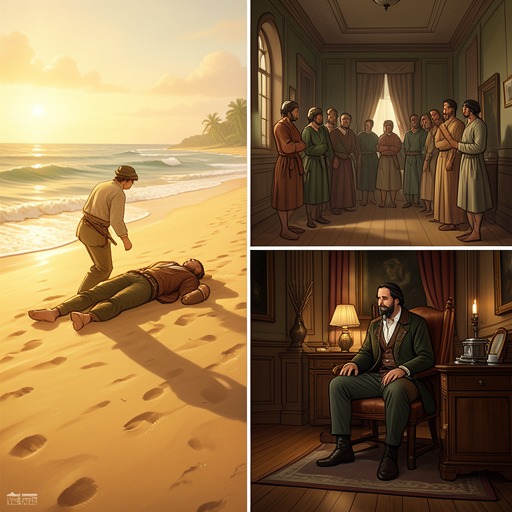
The Stranger (Albert Camus Edition)Freedom and imprisonment form one of the novel’s central reversals: imprisonment begins as the loss of an open, sensory life, but gradually becomes a condition to which Meursault adapts, while freedom survives mainly as memory. The prison does not merely confine his body. It regulates cigarettes, visitors, movement, time, and eventually the horizon of possible futures, making punishment a social system that reaches from ordinary deprivation to the death sentence.
From Ordinary Life to Confinement
Meursault initially has difficulty recognizing prison as a permanent reality. A few days after he is sent there, he decides that imprisonment is a phase of his life he does not wish to discuss, yet he remains vaguely hopeful that some agreeable surprise might occur. His understanding changes after Marie’s first and only visit. When her letter informs him that she will no longer be allowed to see him because she is not his wife, the cell becomes, in his words, his “last home,” a dead end rather than a temporary interruption.
That change is set against the freedom of his former life. Before confinement, freedom is experienced through immediate physical possibilities: going to the beach, swimming, feeling water against his body, and moving through the world without having to request permission. After Marie’s visit, the imagined sound of ripples and the remembered smoothness of water become painful precisely because they expose the narrowness of the cell. The memory of freedom does not console him at first; it intensifies confinement by preserving a bodily knowledge of what is no longer available.
The contrast also reaches back to the opening of the story. After Madame Meursault’s funeral, Meursault remembers the bus returning to Algiers, the brightly lit streets, and his pleasure at imagining twelve hours of sleep. Even amid mourning, the outside world remains a field of movement, light, travel, and private sensation. Prison later turns these ordinary capacities into controlled privileges, showing that the loss of freedom is not only the loss of dramatic adventures but the loss of unremarkable access to one’s own body and schedule.
Punishment as a System of Deprivation
A conversation with the chief jailer gives imprisonment its clearest institutional definition. When Meursault complains that the lack of women seems unfair, the jailer explains that liberty means precisely the ability to do what prisoners are now prevented from doing. Meursault understands the logic: deprivation would not be punishment if the desired actions remained available. The exchange converts an apparently incidental frustration into the operating principle of the prison. Punishment works by taking ordinary freedoms and making their absence continuously felt.
Cigarettes provide the most concrete example. When Meursault is brought to prison, officials remove his belt, shoelaces, pocket contents, and cigarettes. Once alone in his cell, he asks for the cigarettes back, only to be told that smoking is forbidden. During the first days he suffers intensely, tearing splinters from the plank bed and sucking them while feeling faint and bilious. The prohibition seems pointless to him because smoking would appear to harm no one else, but he later understands that the deprivation itself is the point. By the time the craving disappears, the restriction has ceased to function as an active punishment, revealing how institutional discipline depends first on desire and then on the body’s forced adjustment.
The same mechanism governs access to people. Marie’s visit is not ended by the emotional wishes of either visitor or prisoner, but by a rule concerning marital status. Her exclusion therefore makes intimacy part of the prison’s administrative structure. The prison controls not only where Meursault can go but who may reach him, converting companionship into a regulated concession and leaving the cell as the final result of both spatial and relational isolation.
Adaptation and the Prisoner’s Mind
Meursault’s most important transformation is the change from thinking like a free man to thinking like a prisoner. At first he is suddenly seized by the desire to go swimming, and the imagined beach makes the cell feel smaller. After a few months, however, he waits for the daily courtyard walk or for a visit from his lawyer. His expectations contract around the prison’s timetable. The shift is not presented as a moral improvement or a triumphant psychological victory; it is the practical education of a person learning what kinds of desire can survive under confinement.
Adaptation extends beyond routine into memory. Meursault discovers that he can mentally reconstruct his former bedroom, beginning at one corner and recording each object, then each object’s details, down to dents, incrustations, chipped edges, and the grain and color of the wood. By repeating the inventory and preserving the order of every item, he gradually turns memory into a storehouse extensive enough to occupy hours. The method allows the outside world to remain accessible without being physically available.
From this practice comes the startling realization that a person who has lived outside for only one day could possess enough memories to live a hundred years in prison without boredom. Memory becomes a limited compensation for lost movement. It cannot restore freedom, but it changes the prison’s temporal pressure: the cell contains fewer external experiences while the mind contains an expanding archive of former ones.
Meursault also discovers that time itself can be domesticated. Long bouts of sleep, memories, repeated readings of a scrap of newspaper, and the alternation of light and darkness make the days slip past. The days are simultaneously long as periods to be endured and short because they overlap until they lose their distinctness. When the jailer says that Meursault has been imprisoned for six months, Meursault believes him, but the duration conveys almost nothing; subjectively, it has felt like one unbroken day. Imprisonment therefore controls time not only by making it pass slowly but by erasing the boundaries through which ordinary life is organized.
The fragmentary story of a traveler murdered by his mother and sister after returning home under an assumed name becomes part of this temporal regime. Meursault reads the newspaper scrap thousands of times, using repetition to fill the empty hours. The story’s violence and implausibility matter less to the prison’s economy than its repeatability: a tiny piece of the outside world can be revisited until it becomes a fixed object within confinement.
Freedom, Judgment, and the Death Sentence
The logic of confinement reaches its final form in the courtroom. When the judgment is pronounced, Meursault is sentenced, in the name of the French people, to be decapitated in a public place. The sentence transforms imprisonment from a bounded present into a future that has been institutionally scheduled. The state no longer merely restricts his movement; it claims authority over the endpoint of his life.
Afterward, Meursault fixates on the possibility of escaping what he calls the “implacable machinery of justice.” He imagines a condemned prisoner breaking through the police cordon, disappearing just before the guillotine falls, or benefiting from a single failure in the otherwise inexorable sequence of events. Even a desperate escape ending in capture or a bullet in the back would offer a final moment of hope. Yet he recognizes that this last freedom has been denied as well: he is caught irrevocably.
His reasoning exposes a tension between legal decision and physical certainty. The verdict seems contingent because it was delivered at one hour rather than another, could have been different, and was attributed to the vague collective authority of the French people. Nevertheless, once pronounced, its consequences become as tangible as the wall against which he lies. The court’s abstract language thus produces concrete bodily confinement. Freedom is not defeated only by bars; it is defeated when an official decision turns a possible future into an unavoidable sequence.
Significance
Freedom and imprisonment are not simple opposites in Meursault’s experience. Freedom appears first as movement, sexuality, smoking, visits, swimming, and the unexamined possession of time. Imprisonment removes these one by one, then teaches him to replace them with routines, memory, sleep, and narrowed expectations. The fact that he can adapt does not make the prison harmless. Instead, adaptation shows how thoroughly a punitive environment can reorganize desire until the prisoner’s mind begins to measure life by the limits imposed upon it.
The progression also links personal confinement to state violence. The prison’s rules regulate the smallest bodily habits, while the court and the death penalty determine the largest fact of existence. Between these poles lies a continuous chain of control: seized possessions, forbidden cigarettes, restricted visitors, isolated space, managed time, supervised movement, and finally execution. The novel’s force comes from showing that the final sentence is not an isolated rupture but the most extreme expression of a process already present in the cell.
Yet memory preserves a residual freedom. Meursault can reconstruct a room, summon the feel of water, reread a crime story, and observe the changing sky. These acts do not restore the outside world, and they do not defeat the legal machinery, but they prevent confinement from becoming total in the instant of experience. Freedom survives less as power over circumstances than as the capacity to notice, remember, and recognize what punishment has taken away.